Antenna cables play a crucial role in transmitting signals effectively. According to a recent industry report by the National Association of Broadcasters, over 75% of signal issues stem from sub-optimal cable configurations. This highlights the need for proper selection and installation of Antenna Cables to achieve the best possible quality.
John Smith, an expert in telecommunications, notes, “The quality of your Antenna Cable can significantly influence your overall signal reception.” His insights underline a common misconception that any cable will suffice. In reality, choosing the right Antenna Cable involves understanding specifications, lengths, and materials, which can vary widely. For instance, low-quality cables may lead to unnecessary signal loss, compromising performance.
It is essential to reflect on common mistakes in cable installation. Issues like excess cable length and poor connector types often go unnoticed. These factors can lead to interference and degradation of signal quality. By addressing these aspects, users can enhance their setup and enjoy a clearer signal. Ultimately, investing in quality Antenna Cables and mindful installation can yield significant improvements in performance.
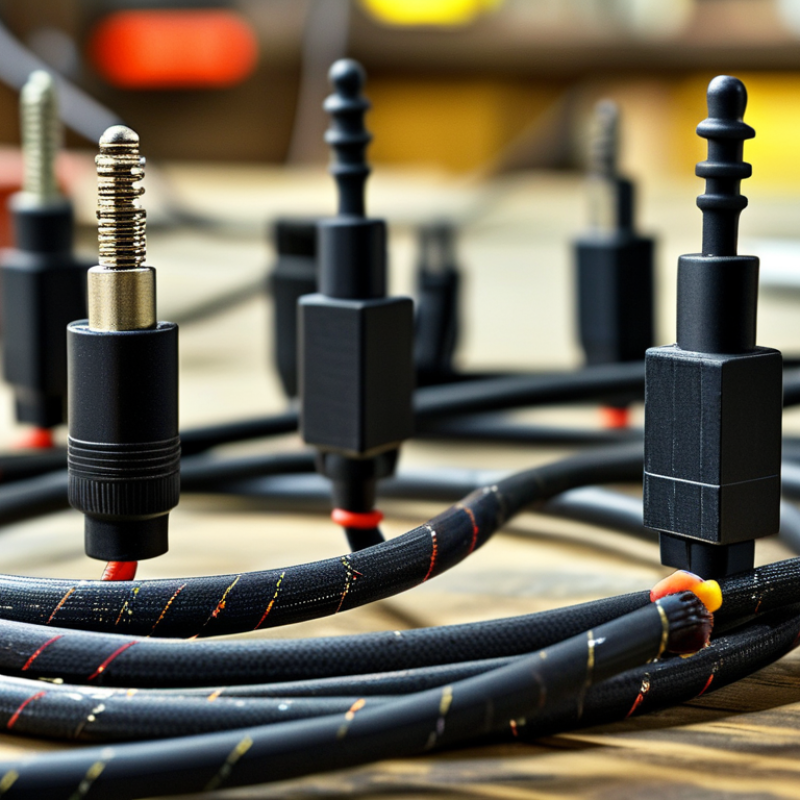
Antenna Cable Types: Understanding RG Ratings and Their Impact on Signal
Understanding RG ratings is crucial for selecting the best antenna cable. RG stands for Radio Guide and indicates the cable's construction and dielectric properties. For instance, RG59 is commonly used for low-frequency applications, while RG6 is suitable for higher frequencies. The choice of RG rating impacts both signal quality and performance significantly. Higher RG ratings generally mean better shielding and lower signal loss.
Cable length is another factor that interacts with RG ratings. Longer cables can lead to more signal degradation, especially if an inappropriate RG rating is used. Ideally, using shorter runs of RG6 can ensure a clearer signal. Also, consider the environment your cables will run through. Cables exposed to harsh conditions may require better insulation to maintain signal integrity.
Do not overlook connectors and fittings. Poor-quality connectors can negate any advantages of a higher RG rating. Test your system with different cables if possible. Experimenting and reflecting on your setup can help identify signal issues. The right combination of RG rating, cable length, and quality connectors will lead to improved performance.
Optimal Cable Length: Balancing Signal Quality and Loss Over Distances
When it comes to antenna cables, optimal cable length is pivotal for enhancing signal quality. Longer cables may lead to signal loss, which can degrade performance. Ideally, keep your cable as short as feasible. A length between 10 to 25 feet often strikes a good balance. Beyond this, the risk of attenuation increases significantly.
Some common mistakes impact the effectiveness of your antenna set-up. Using low-quality cables can cause unnecessary signal degradation. Ensure that connectors are tightly secured to prevent loose connections. If you're seeing weak signals, review your cable length. Excessive length might be a silent culprit in your signal struggle.
To maximize performance, consider cable quality. Select a cable designed for minimal loss. Coaxial cables with a solid copper core usually perform better. Pay attention to the shielding; good quality shielding can help mitigate interference. Regularly check for wear or damage, as this can affect overall functionality.
Antenna Cable Signal Quality vs. Cable Length
This chart illustrates the relationship between cable length and signal quality, represented as the Signal-to-Noise Ratio (SNR) in dB. The data shows how signal quality tends to decrease as the length of the antenna cable increases, highlighting the importance of selecting an optimal cable length for maintaining signal integrity.
Shielding Techniques: Minimizing Interference for Improved Performance
Shielding techniques play a crucial role in enhancing the performance of antenna cables. Effective shielding helps to minimize electromagnetic interference, which can severely impact signal quality. According to a report by the Institute of Electrical and Electronics Engineers, up to 80% of signal loss can occur due to interference. This highlights the importance of using high-quality materials for shielding to enhance durability and effectiveness.
Using copper or aluminum foil for shielding can significantly reduce noise levels. Research indicates that properly shielded cables can experience up to a 50% reduction in interference, leading to clearer signals. Additionally, implementing twisted pair configurations can further improve resistance to external interference. It’s essential to focus on both the quality of materials and the design of the cable for optimal performance.
Despite these advancements, challenges remain. Not all installations will achieve the desired signal clarity. Factors such as environmental conditions and cable routing may still introduce variables. Continuous testing and adjustment may be necessary to ensure that your setup performs at its best. By refining shielding techniques and addressing these challenges, significant improvements in antenna performance can be realized.
Connector Choices: Enhancing Signal Integrity with Quality Connections
When selecting connectors for antenna cables, the right choice can significantly enhance signal integrity. High-quality connectors reduce signal loss, which is crucial for maintaining performance in any communication system. Reports indicate that connectors can contribute to up to 30% of overall signal degradation. Ensuring you choose connectors that minimize this loss is essential for optimal antenna performance.
Using connectors with proper impedance matching is a key consideration. Mismatched impedance can lead to reflection issues that degrade the signal quality. A study from an industry journal highlighted that using low-loss connectors can improve signal strength by as much as 15%. These connectors should always be installed correctly, as poor connections can lead to significant performance dips.
Consider the following: ensure connectors fit snugly and are free from corrosion. Choose materials that are compatible with the environment. Weatherproof connectors are advisable if the setup is outside. Always test connections regularly to catch issues early. Regular maintenance is important; even small corrosion can disrupt signal quality. Observing these practices helps maintain the integrity of your antenna system, ultimately enhancing overall performance.
Installation Best Practices: Ensuring Signal Strength and Reliability
When installing antenna cables, signal quality is paramount. Proper installation practices can significantly affect performance. Research indicates that nearly 80% of signal issues arise from improper installation and cable selection. To achieve optimal signal strength, ensure that cables are kept as straight as possible. Sharp bends can lead to loss, reducing signal clarity.
Choosing the right connectors is equally crucial. Poorly made connectors can introduce noise, impacting signal fidelity. According to industry studies, using high-quality connectors can enhance signal strength by up to 25%. It’s important to securely attach connectors to prevent water intrusion, which can degrade quality over time.
Even with the right materials, mistakes can happen. Many installers overlook the importance of grounding and shielding. This can leave the system vulnerable to interference from external sources. Monitoring equipment regularly can help identify potential issues early. Remember that even a small oversight can lead to significant performance drops. Careful attention to detail in installation practices is essential for achieving reliable and strong signal quality.
Antenna Cable Tips for Best Signal Quality and Performance
| Tip |
Description |
Impact on Signal Quality |
| Use Quality Cable |
Select low-loss coaxial cables to minimize signal degradation. |
High |
| Minimize Length |
Keep cable runs as short as possible to reduce signal loss. |
High |
| Proper Grounding |
Ensure that the antenna system is well grounded to avoid interference. |
Medium |
| Avoid Sharp Bends |
Avoid kinks and sharp bends in the cable to maintain signal integrity. |
Medium |
| Use Waterproof Connectors |
Use connectors that prevent moisture ingress to prolong lifespan and reliability. |
High |
Conclusion
Antenna cables are crucial for achieving optimal signal quality and performance in various applications. Understanding the different types of antenna cables and RG ratings is essential, as these ratings significantly impact signal transmission. Choosing the appropriate cable length is also vital, as longer cables can lead to increased signal loss, thus compromising quality.
In addition to cable types and length, employing effective shielding techniques can help minimize interference from external sources, enhancing overall performance. The selection of quality connectors is another important factor; high-quality connections ensure better signal integrity. Finally, adhering to best installation practices plays a key role in maintaining reliable signal strength, ultimately leading to an improved user experience with antenna systems.

 Laurence