2026 Best Electrical Cable Options for Global Buyers?

Time:2026-05-09 Author:Sienna
0%

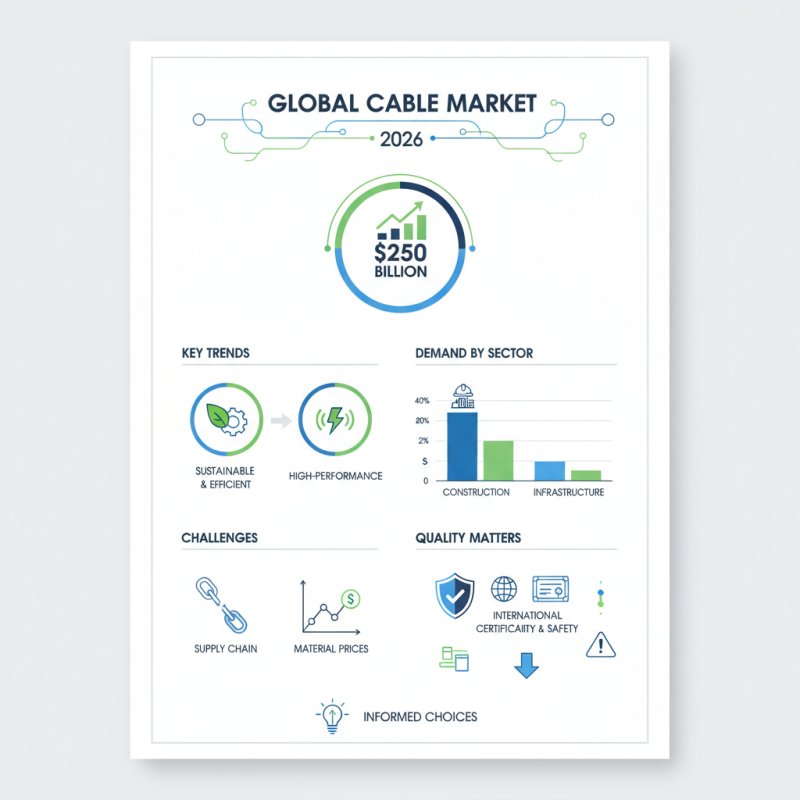
In 2026, the global electrical cable market is projected to reach $250 billion, driven by rising demand across various industries. Electrical cables are essential for power distribution, communication, and infrastructure development. Key players report a growing trend towards sustainable and efficient cable solutions.

Recent data shows that demand for high-performance electrical cables is surging. The construction sector alone accounts for about 40% of this demand. However, issues such as supply chain disruptions and fluctuating raw material prices create challenges. Ensuring the selection of the right electrical cable can substantially impact project reliability and safety.

Industry experts emphasize the importance of quality standards. Selecting cables that adhere to international certifications enhances safety. Yet, many buyers overlook this aspect, leading to potential hazards. It is crucial for global buyers to stay informed about the best options available in the market.
2026 Best Electrical Cable Options for Global Buyers?

2026 Electrical Cable Market Overview: Trends and Projections

The electrical cable market is experiencing significant growth, driven by increasing industrial demand and infrastructure development. According to a recent report by MarketsandMarkets, the global electrical cable market is projected to reach approximately $300 billion by 2026, expanding at a CAGR of about 6% from 2021. This growth reflects a surge in renewable energy projects and advancements in smart grid technologies.

Several trends are reshaping this market landscape. The demand for high-voltage cables is on the rise, particularly in the renewable sector. These cables enable efficient energy transfer over long distances. Moreover, there is a noticeable shift toward sustainable materials. The use of environmentally friendly insulation is increasing but is still not widespread. Manufacturers face challenges in balancing performance and environmental impact.

Innovation is crucial. The move towards digital cables for connectivity solutions is gaining traction. These cables are tailored for smart cities and IoT applications. However, there remains skepticism regarding security and reliability. As the market evolves, stakeholders must navigate these complexities to meet emerging demands effectively. The future of electrical cables holds both promise and challenges that require careful consideration.

Key Factors Influencing Electrical Cable Selection for Global Buyers

When selecting electrical cables, global buyers must consider various factors. The choice often hinges on the cable's material, voltage rating, and environmental conditions. According to a recent industry report, copper and aluminum remain the most commonly used materials due to their conductivity properties. However, copper cabling is generally more reliable, exhibiting lower resistance over long distances.

Installation conditions are also crucial. Cables used outdoors must be resistant to UV rays and moisture. A study from the International Electrotechnical Commission highlights that about 30% of cable failures occur due to improper installation and environmental exposure. Therefore, understanding the application environment is vital for ensuring durability and performance.

Tips: Always verify that electrical cables meet global safety standards. Conduct regular inspections to prevent failures. Select cables based on detailed manufacturer specifications rather than price alone. Remember, the cheapest option may lead to higher long-term costs due to failures or replacements. It’s essential to balance cost with quality to ensure reliability in electrical systems.

2026 Best Electrical Cable Options - Key Factors Influencing Selection

This chart illustrates key factors influencing the selection of electrical cables by global buyers, focusing on various attributes such as conductivity, insulation, price, and environmental considerations. The data reflects preferences based on recent market trends.

Comparative Analysis of Different Types of Electrical Cables Available

When considering electrical cables, a comparative analysis reveals diverse options, each serving specific needs. The global cable market is projected to grow significantly, reaching $293 billion by 2026 (Mordor Intelligence). This increase highlights the demand for various cable types, including copper, aluminum, and fiber-optic cables.

Copper cables remain a popular choice due to their excellent conductivity and durability. However, they are often more expensive and susceptible to theft. Aluminum cables are lighter and cost-effective but can have lower conductivity. Meanwhile, fiber-optic cables are gaining traction, offering high-speed data transmission and resistance to interference. They are essential for future-proofing infrastructure but can come with higher installation costs.

Tips: Always evaluate the specific requirements of your project before choosing a cable type. Consider environmental factors that could affect performance, such as temperature and exposure to chemicals. Balancing cost and reliability is crucial for long-term satisfaction. Make sure to consult with industry professionals to navigate the complexities of cable selection. Typically, a thorough analysis of technical specifications can reveal insights that help avoid costly mistakes.

Emerging Technologies Impacting the Electrical Cable Industry in 2026

As we approach 2026, the electrical cable industry is undergoing significant transformations driven by emerging technologies. Innovations such as smart materials and renewable energy sources reshaping cable design are becoming prominent. These advanced materials aim to enhance durability and performance, allowing cables to withstand extreme conditions.

The rise of electric vehicles and sustainable energy solutions is also impacting production. Manufacturers need to adapt to a growing demand for high-efficiency cables. Adopting eco-friendly practices has become essential. Many companies are exploring biodegradable options, which could offer both environmental benefits and efficiency.

However, challenges remain. Not all new technologies have proven reliable in real-world applications. The integration of smart technologies into cables may lead to unforeseen complexities. This uncertainty calls for continuous evaluation and testing to ensure safety and performance. As the landscape evolves, the industry must navigate these changes while prioritizing reliable and safe solutions.

2026 Best Electrical Cable Options for Global Buyers

Cable Type Conductor Material Insulation Type Temperature Rating (°C) Max Voltage (V) Applications
PVC Insulated Cable Copper PVC 70 600 Building Wiring
XLPE Cable Aluminum Cross-Linked Polyethylene 90 1000 Industrial Applications
Rubber Cable Copper Rubber 60 450 Flexible Applications
Fiber Optic Cable Glass Polyethylene N/A N/A Telecommunications
Shielded Cable Copper PVC 75 600 Industrial Equipment

Sustainability and Compliance: Key Considerations for Electrical Cables

When choosing electrical cables, sustainability and compliance are essential factors. Global buyers must prioritize materials that reduce environmental impact. Sustainable cables use recycled materials and less harmful substances. This creates safer systems for both users and the planet.


Tips: Look for certifications. They often indicate compliance with international standards. Certifications may include RoHS, REACH, or ISO. Each one reflects a commitment to environmental safety.


Another critical consideration is end-of-life management. How a cable is disposed of critically affects its sustainability. Buyers should choose cables that are recyclable or biodegradable. This helps limit waste and promotes a circular economy.


Tips: Consider the lifespan of the cable. Longer-lasting products often reduce the frequency of replacements. Quality materials will usually perform better, leading to lower carbon footprints over time.

FAQS

: What materials are commonly used for electrical cables?

: Copper and aluminum are the most common materials due to their excellent conductivity.

Why is copper preferred over aluminum for long distances?

Copper is more reliable and exhibits lower resistance when used over long distances.

How do environmental conditions affect cable selection?

Cables for outdoor use must resist UV rays and moisture to prevent failures.

What percentage of cable failures are due to installation issues?

About 30% of cable failures occur due to improper installation and environmental exposure.

Why should buyers prioritize quality over price?

Cheaper cables may lead to higher long-term costs due to failures or replacements.

What should buyers look for in terms of sustainability?

Buyers should select cables made from recycled materials and less harmful substances.

What certifications indicate compliance with international standards?

Certifications like RoHS, REACH, and ISO reflect a commitment to environmental safety.

How can end-of-life management be improved?

Choosing recyclable or biodegradable cables limits waste and supports a circular economy.

What emerging technologies are impacting the cable industry?

Innovations like smart materials and renewable energy sources are reshaping cable design and production.

What challenges do new technologies present?

Not all technologies are reliable, and smart integrations may lead to unforeseen complexities.

Conclusion

The article "2026 Best Electrical Cable Options for Global Buyers" provides a comprehensive overview of the electrical cable market, highlighting trends and projections that will shape purchasing decisions in the coming years. It addresses key factors influencing the selection of electrical cables, such as performance characteristics, cost efficiency, and region-specific requirements.

Additionally, the article offers a comparative analysis of different types of electrical cables available, emphasizing their distinct advantages and applications. Emerging technologies are also discussed, showcasing how innovations are transforming the electrical cable industry. Finally, sustainability and compliance are underscored as critical considerations for global buyers, ensuring that selected electrical cables meet environmental standards while maintaining reliability and safety in various applications.


Sienna

Sienna

Sienna is a skilled marketing professional with a deep expertise in our company’s core products and services. With a passion for innovation and detail, she plays a pivotal role in crafting insightful blog posts that not only highlight the unique features of our offerings but also provide valuable......